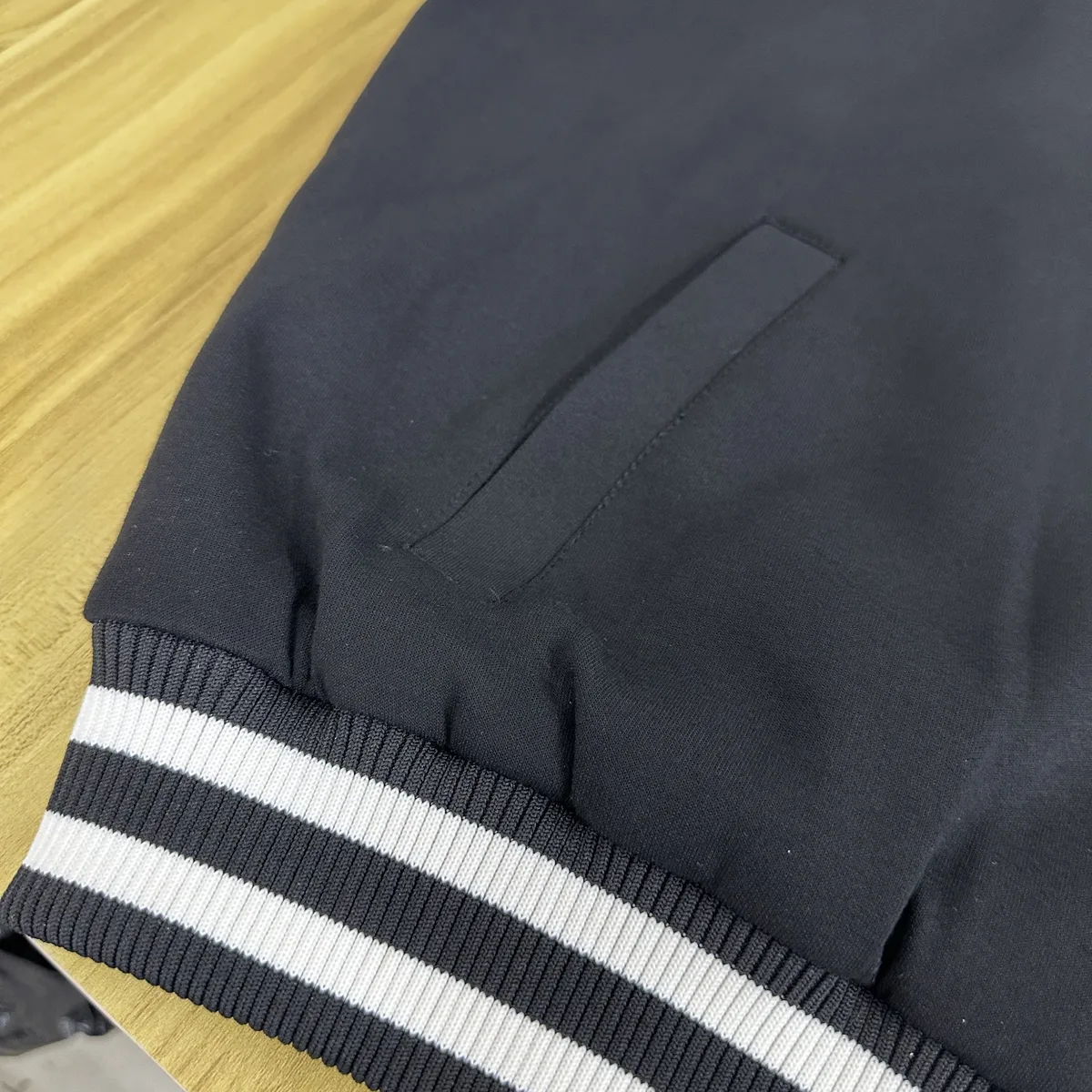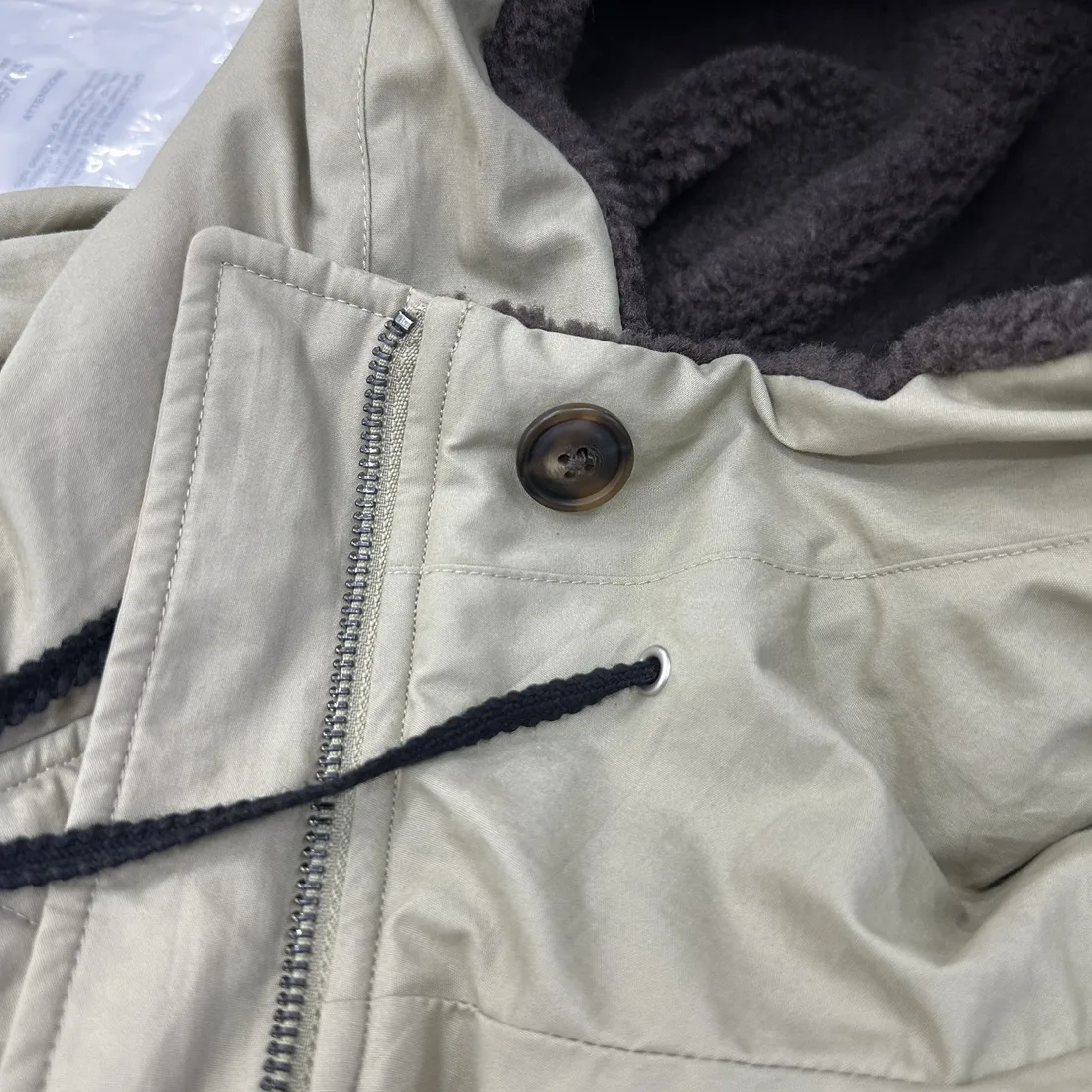
What is the garment finishing process?
The garment finishing process is the set of steps that prepares a sewn piece for review, presentation or packing. Depending on the product and the agreed specification, it may include thread trimming, shaping, pressing, a final appearance check, folding and packing. The exact sequence can vary by garment, fabric and finishing requirements.
For a small clothing brand, finishing is not just about making a sample look neat in a photo. It is a chance to review the garment in its intended shape and confirm that important details still look right after the construction and pressing steps.
Why garment pressing matters for a clothing sample
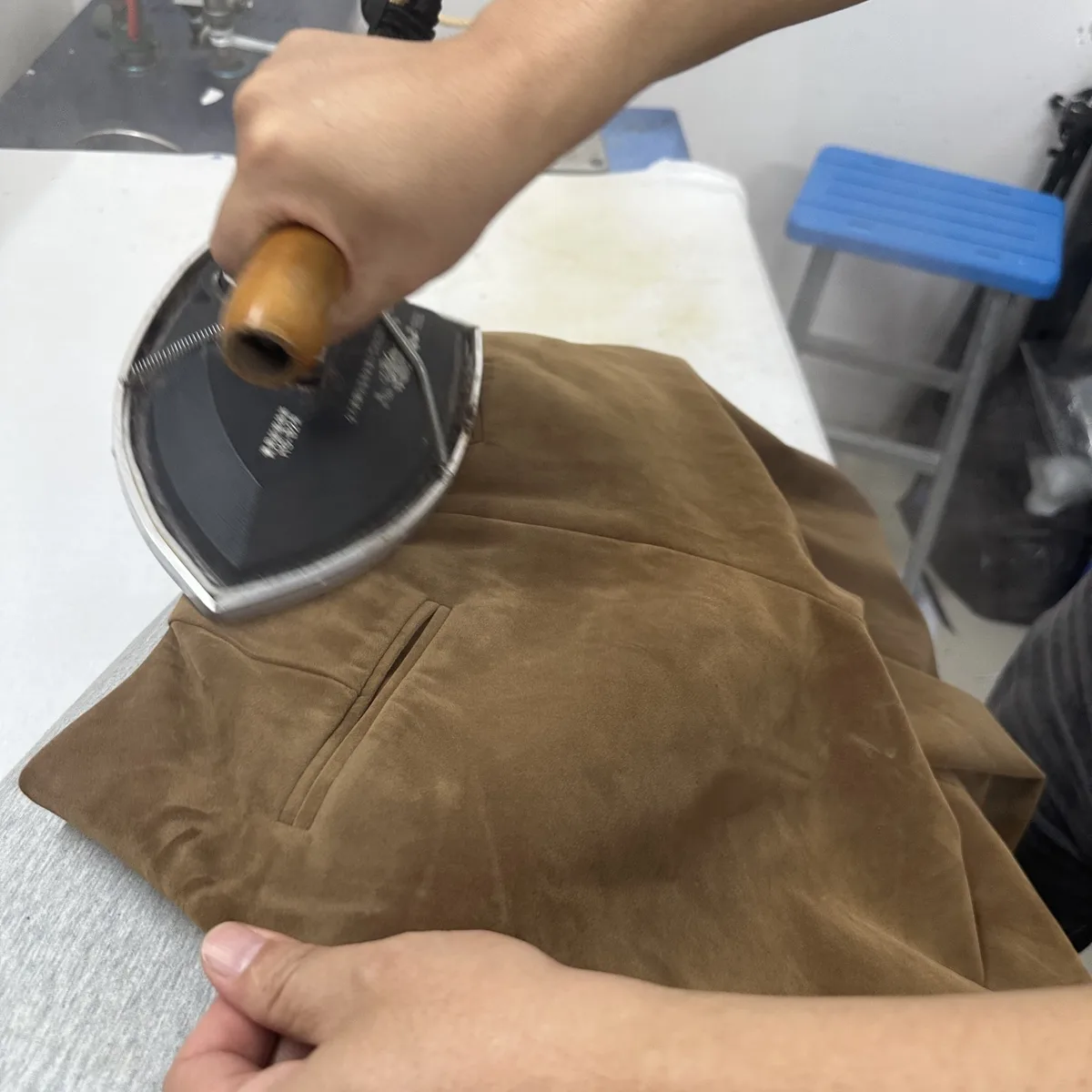
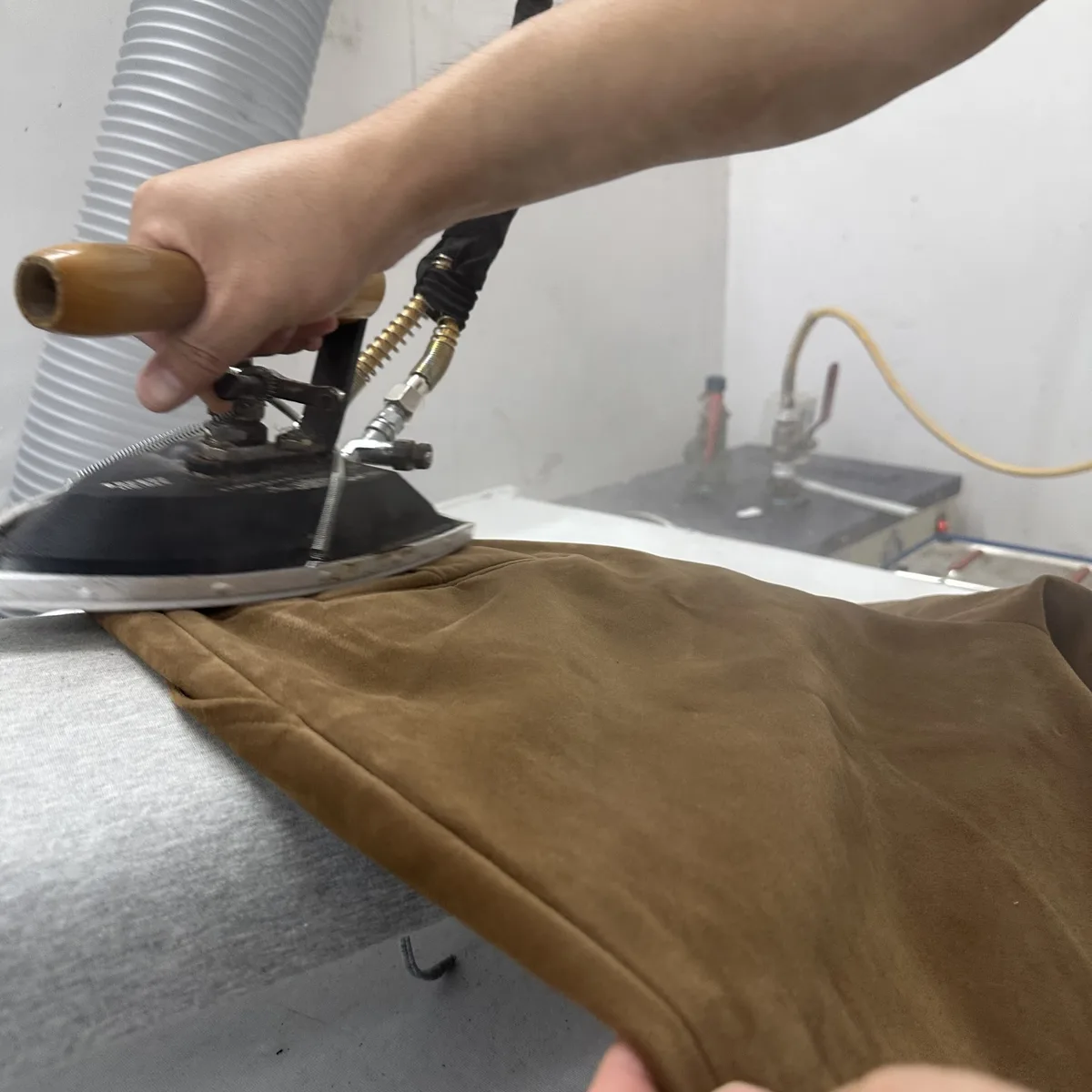
Pressing can help a garment sit more clearly for sample review. It makes details such as a pocket edge, seam line or panel shape easier to see. The photos in this guide show real workshop pressing on sample garments; they illustrate the finishing stage, not a universal temperature or press setting.
Pressing should suit the actual fabric and construction. If you are concerned about shine, marks, flattening or changes in shape, ask the manufacturer how the sample will be handled and review the result on the garment itself. Pressing cannot correct a pattern, measurement or sewing issue, so those need to be checked separately.
What should you check after pressing a garment sample?
Review the complete sample in good, consistent light. Start with the overall silhouette, then check the areas that matter most to your design: seams, pocket edges, plackets, hems and any visible topstitching. Compare the piece with your reference photos and approved measurements rather than relying on memory.
Measure the sample after the agreed finishing steps if those steps may affect its final shape. Record where each measurement begins and ends, and note the tolerance you expect. If something looks different, mark the exact place on a photo and describe the change you want.
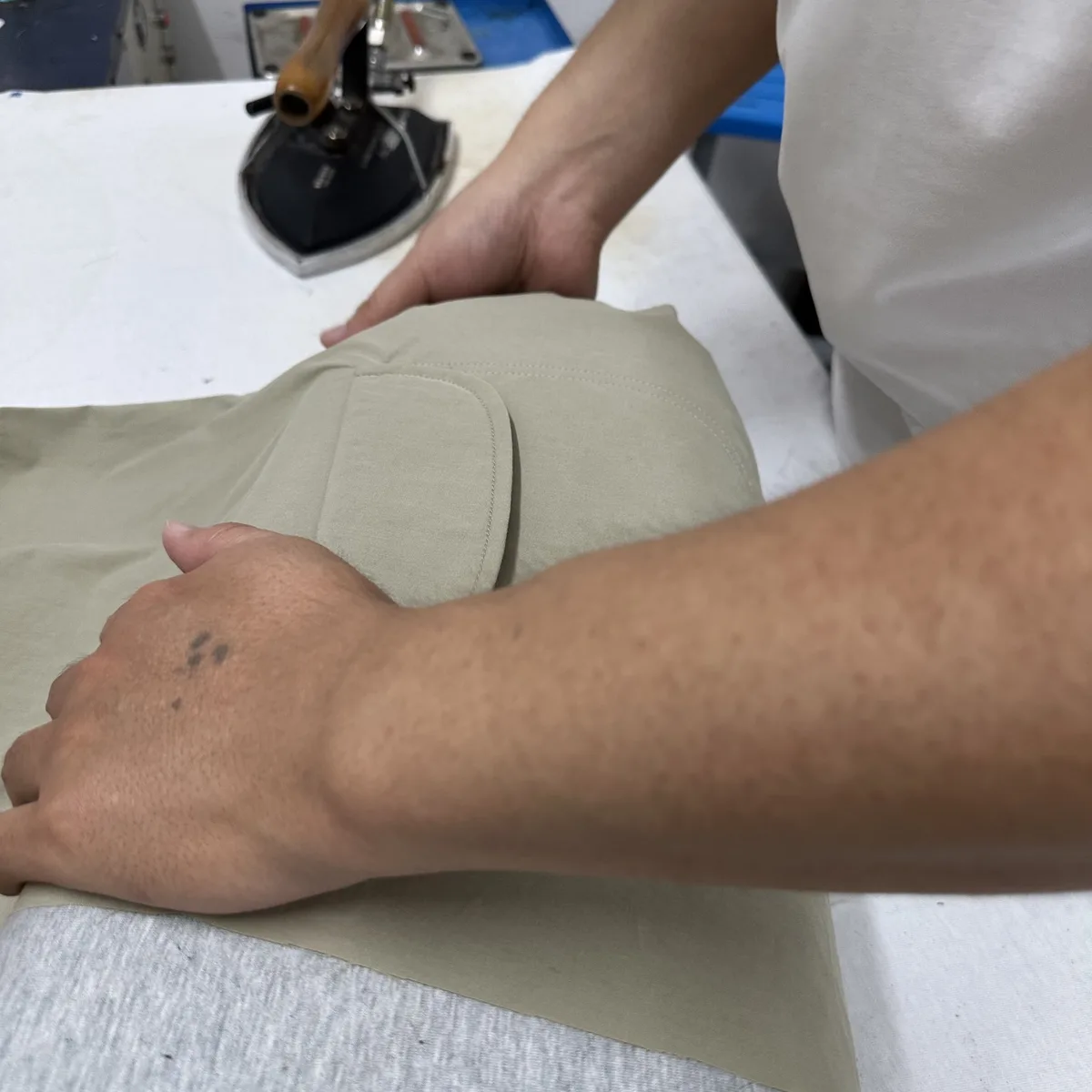
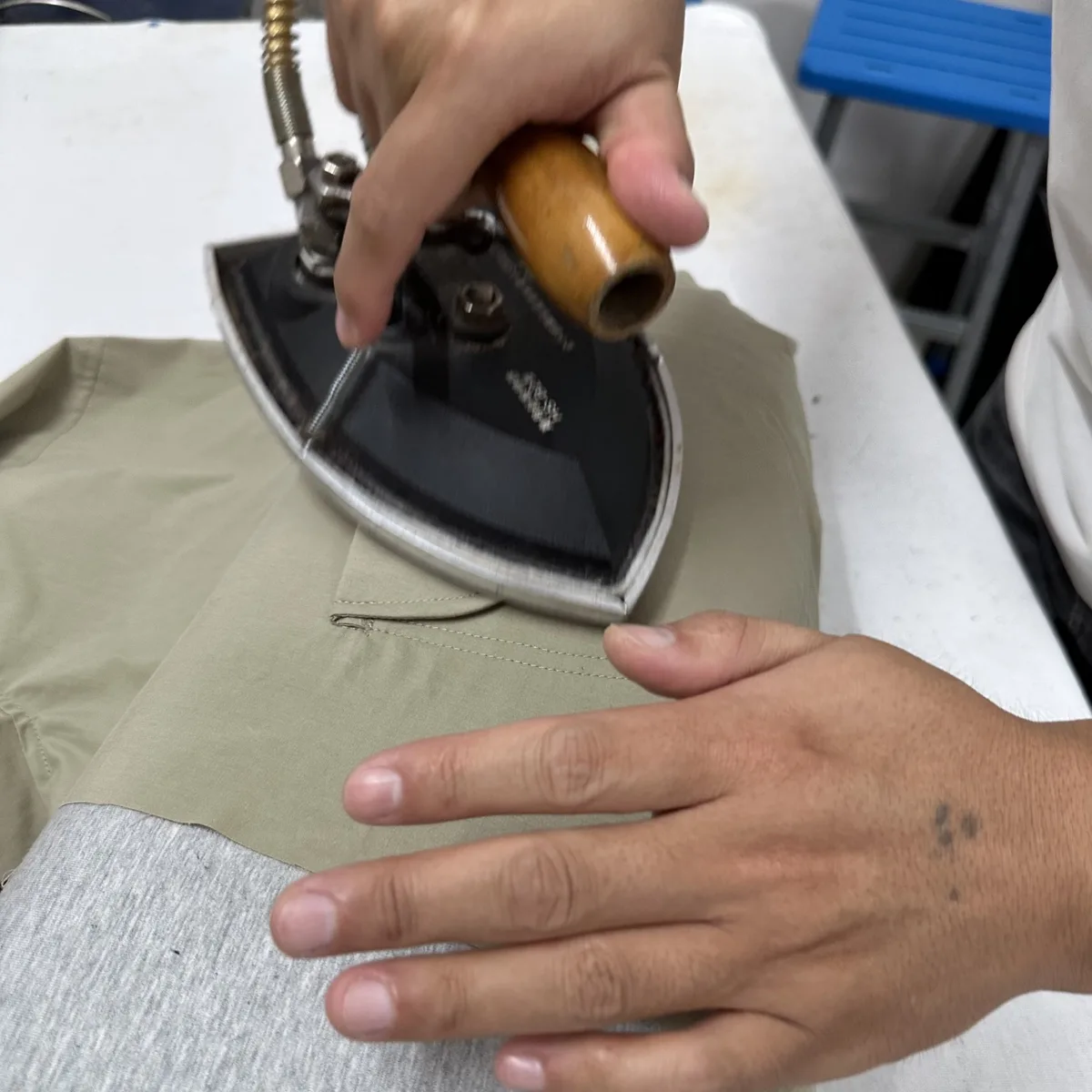
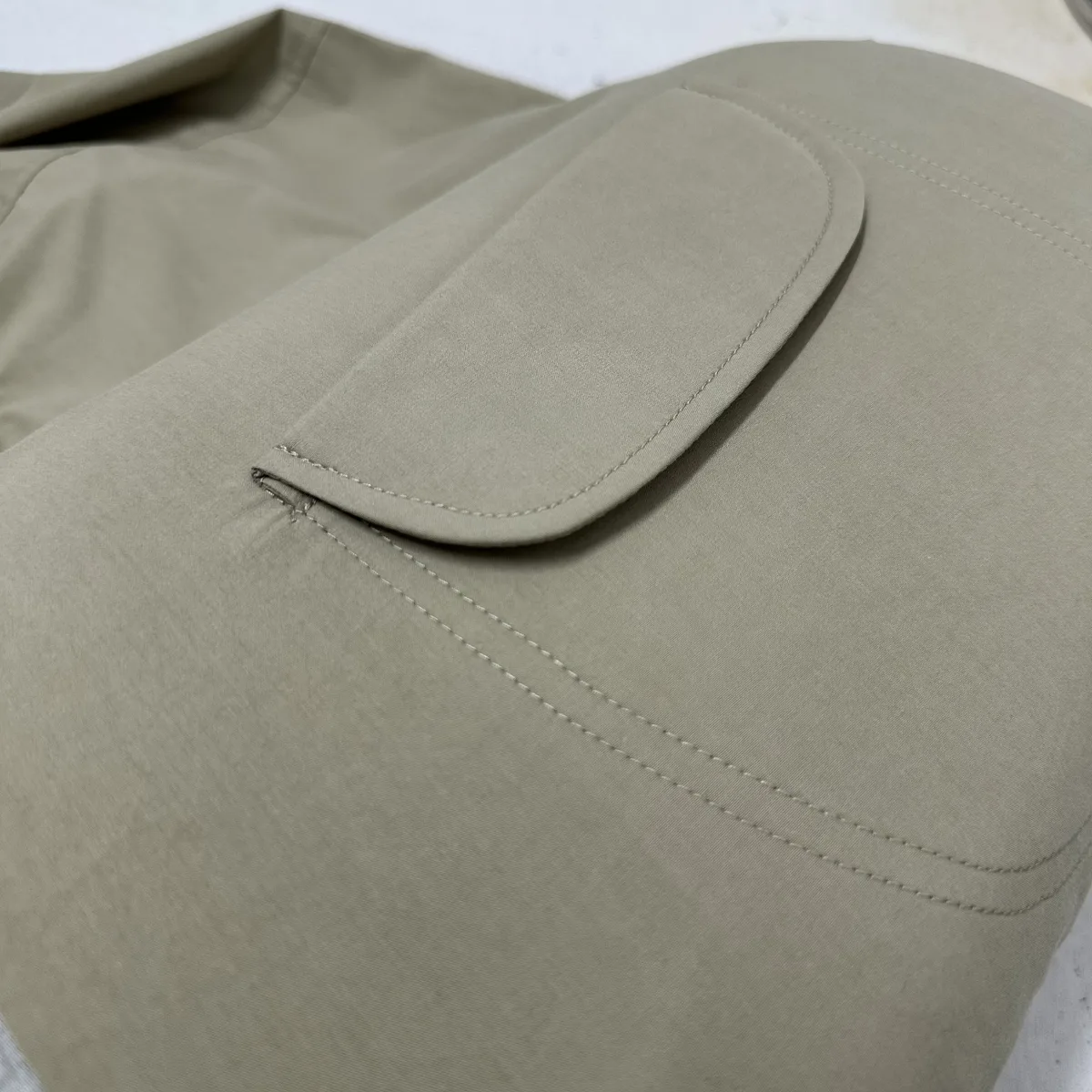
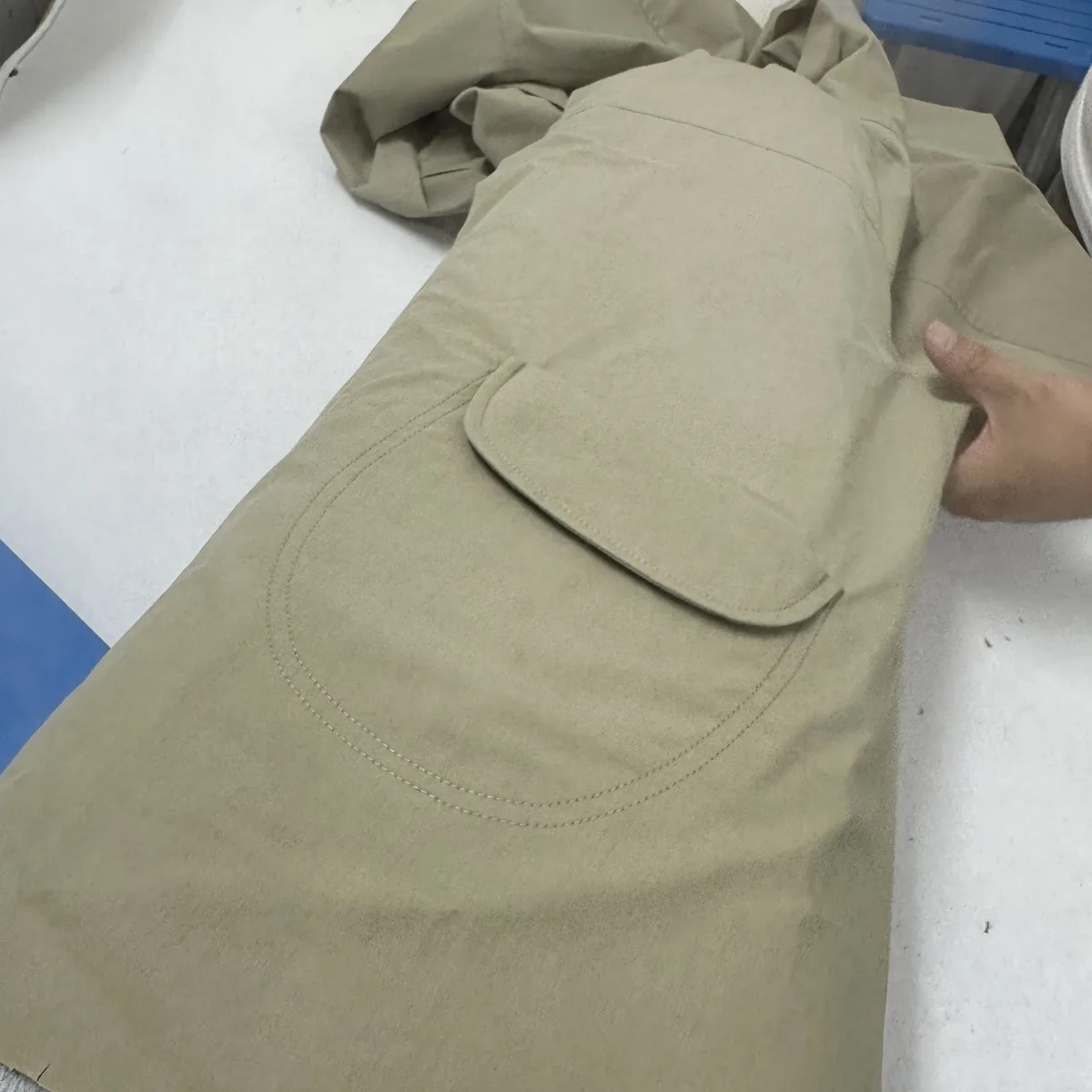
- Compare the garment's overall shape with your approved reference.
- Check measurements after the agreed finishing steps.
- Inspect seams, pocket edges, hems and visible stitching.
- Look for unwanted shine, press marks, folds or distortion.
- Confirm labels, trims and decoration are still positioned correctly.
Common finishing problems—and how to prevent confusion
A sample can look different from the reference because it was photographed under different light, measured before finishing or reviewed while folded. Before requesting a change, lay it flat, use the same measurement points and compare it in similar lighting.
If you see a visible mark or shape issue, send a close photo plus a wider photo that shows where it appears on the garment. State whether you want a correction to the construction, the finish or simply the presentation. Clear feedback helps the factory identify the right next step instead of guessing.
A simple pre-production finishing checklist for small brands
Before approving a sample for bulk clothing production, keep one complete reference garment and one consolidated approval note. Make sure the factory and your brand are looking at the same version of the design and the same finishing expectations.
- Approved sample version and date
- Measurement chart and agreed tolerances
- Fabric, colour and trim references
- Finishing and pressing appearance requirements
- Marked photos for any requested revisions
- Packing, labels and delivery requirements
How YILI supports clothing brands from sample to production
YILI Clothing works with independent labels on custom garment development and production, including sample review, sewing, finishing and quality checks. MOQ starts from 50 pieces per style, depending on fabric, colour and decoration. Typical sample development takes about 5–7 working days after details and materials are confirmed; typical bulk production is about 15–20 days after sample approval and material confirmation. Complex styles or custom materials can affect timing, so confirm the schedule for your project.
To discuss a clothing manufacturing project, send us your design or reference photos, target quantity, preferred fabric direction and delivery country. We can help identify which details need to be confirmed before sampling.