What GSM tells you
GSM means grams per square meter: the weight of a measured area of fabric. It is useful when discussing whether you want a lighter or heavier garment. It does not, on its own, describe softness, durability or the quality of the finished piece.
Two fabrics with the same GSM can feel and drape differently because their fiber composition, yarn, construction and finishing differ. Use weight alongside a clear description of the result you want.
Describe how the garment should feel
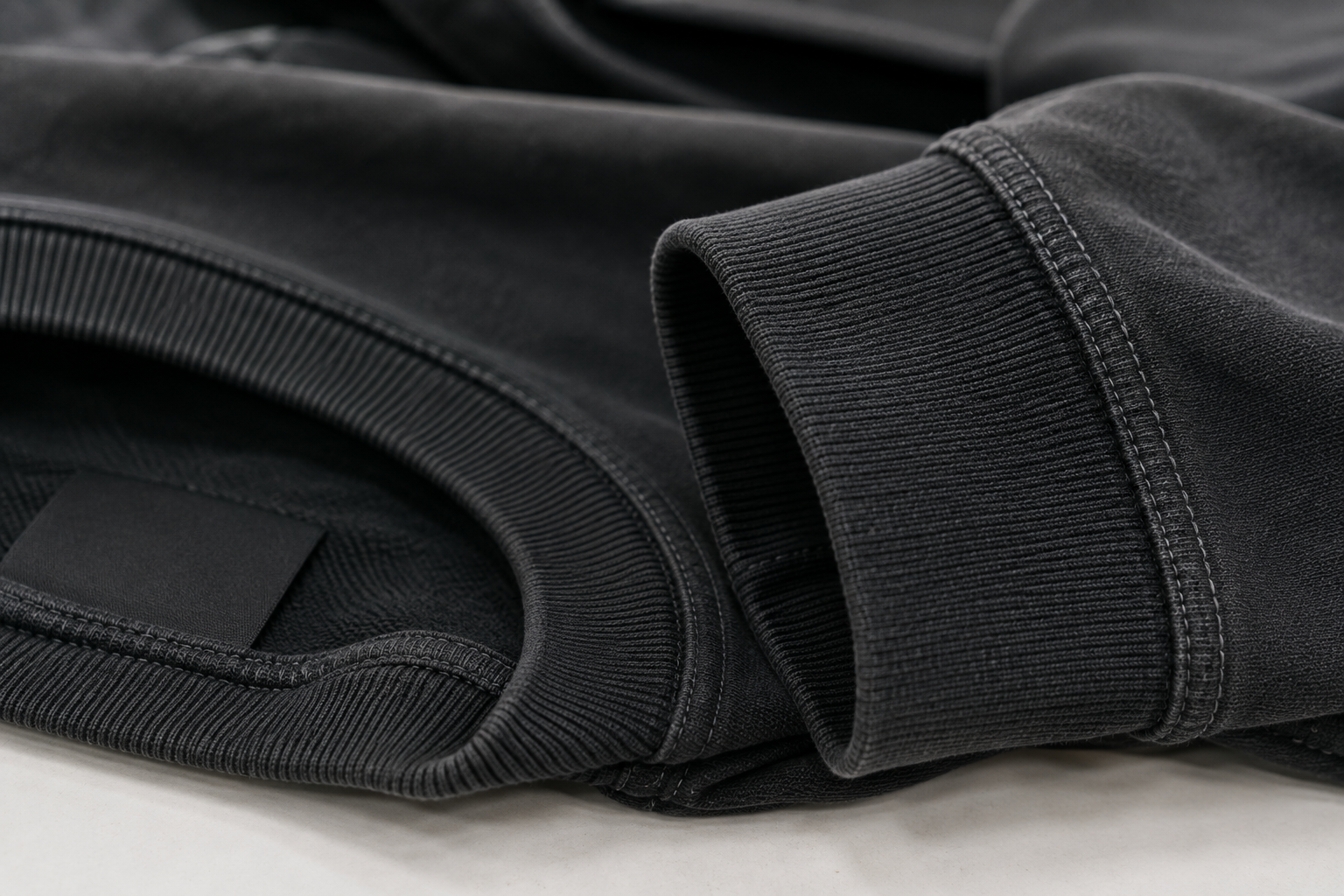
Instead of asking only for “premium cotton,” tell us whether you want a crisp, structured shape or a soft, relaxed drape. For a sweatshirt, specify whether you prefer a looped or brushed interior. For a T-shirt, explain the intended fit and how much structure you want in the body and collar.
- Fiber composition, if you have a requirement
- Target GSM or a reference garment
- Desired surface and interior feel
- Fit, drape and intended use
- Planned print, embroidery or wash
Review the fabric with your design
Fabric should be considered together with the garment construction and decoration. A fabric that looks right as a swatch may behave differently in a finished garment. Review the sample for proportion, movement, seam appearance and the finish you approved.
For washing or other treatments, confirm whether the reference describes the fabric before treatment or the finished garment. That keeps everyone discussing the same target.
Bring a reference to the discussion
If you are unsure of the specification, share close-up photos and describe the feel you are trying to achieve. A physical reference can help make the conversation more precise. We will discuss suitable available options and confirm the selected material before sampling.